Showing posts with label abstractpoet. Show all posts

Saturday, December 8, 2007

Respect the Coq!

So I've really been enjoying Chubby Hubby's Singapore-based food blog, and he had a great post about how a lot of foodies tend to thumb their noses at that most generic (at least at a lot of restaurants in the States) of meats: chicken.

Was it Anthony Bourdain who said that chefs see chicken as the menu item for people who don't know what else to order? Anyway, Chubby Hubby gives a rather impassioned defense of chicken and ends it with a lovely recipe for his wife's version of Coq au Vin.

Coq au Vin is one of those daunting, oh-so-French sounding dishes that I've never even ordered, much less tried to make myself--and I really didn't even have any idea what it was supposed to taste like. But I was feeling ambitious and the recipe seemed simple (and made my mouth water just reading it), so I figured what the hey.

It'd be silly for me to copy and paste the whole recipe, so I'll just give the abbreviated version here. Oh, and I roughly halved the original recipe, since I figured 4 drumsticks is kinda sorta equal to 2 thighs (we couldn't find thighs), and I didn't want to end up with too much sauce for two people.

So first you need to chop up an onion and a clove of garlic, and dice a carrot and a few slices of bacon (pancetta would be better, but we live in Taiwan):
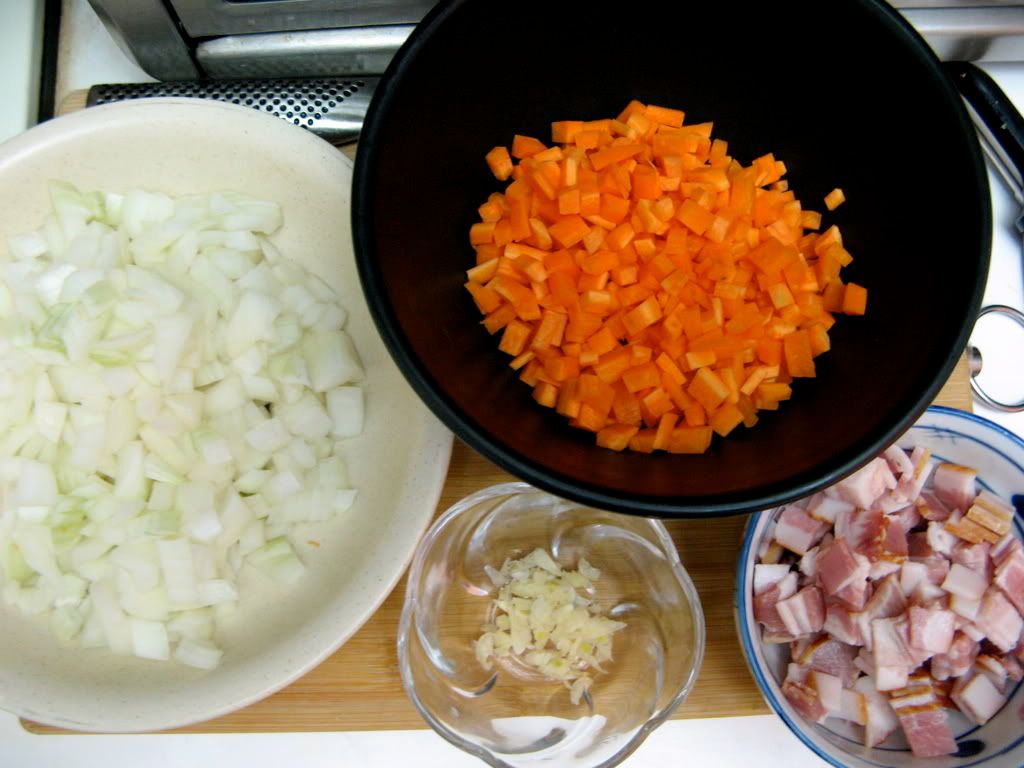
Okay, so maybe Mario Batali would mock me
for my uneven dicing, but I did my best.


Then, over medium heat, heat up a little bit of butter and olive oil in a heavy pot, put the bacon in and, after that gets some color, add the carrots, onions and garlic. Let the vegetables soften for five minutes or so, then, using some kind of slotted spoon, move everything in the pot to a bowl. In the oil that's left in the pot, brown the chicken on all sides. (Coq au Vin is normally made with rooster, but where was I going to get a rooster?)


Now turn the heat up, dump your veggies and bacon back in, and pour about half a bottle of Gewurztraminer (a sweet white wine) into the pot. Once it's boiling, turn the heat down and let everything gently simmer for about 25 minutes, flipping the chicken every so often.


When the chicken seems like it's done, fish it out and put it aside for now. Now add about a third of a pint of heavy cream (the recipe calls for double cream, but you can't easily get that in Taiwan or even the States).

Season with salt, freshly ground black pepper and sugar (optional) to taste. You'll need a good amount of salt and pepper, and depending on how sweet your wine is, you might want to leave the sugar out altogether. Add some chopped parsley (or dried parsley if you can't get a hold of fresh) and about a quarter pound of regular white mushrooms (cut into quarters). Now just let this sauce reduce and thicken.
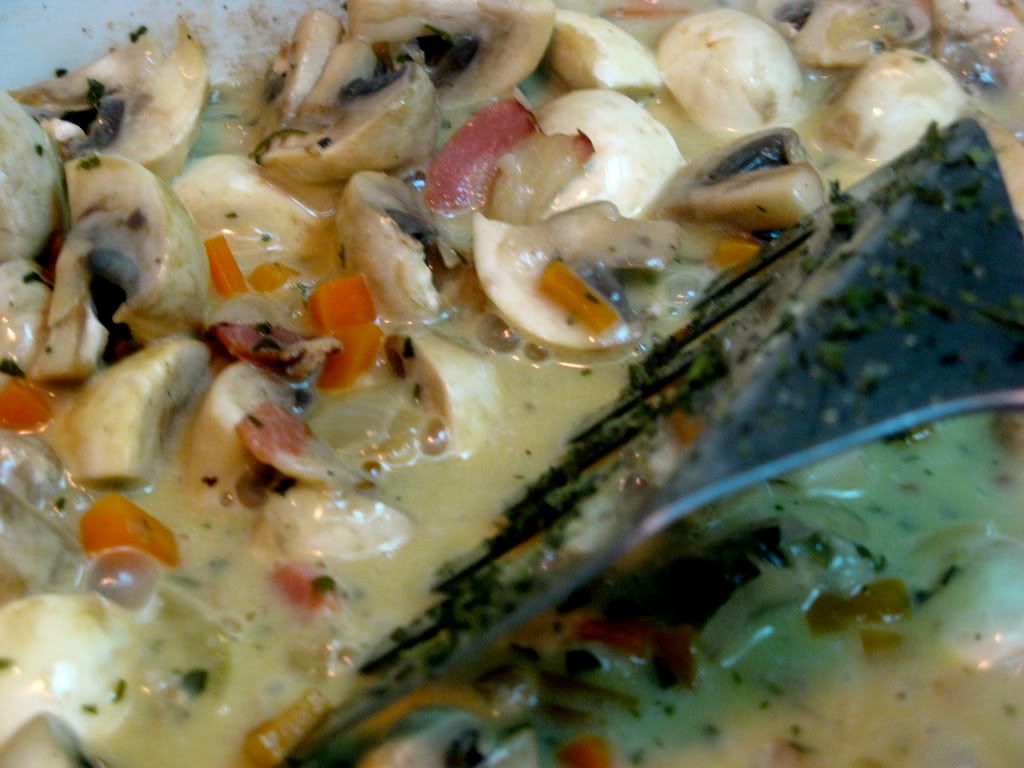

Once the sauce is to your liking, just put the chicken back in and let it heat back up. What you end up with is this luxuriously creamy, subtly sweet sauce--and all the veggies and the bacon add different layers of flavor. And the chicken gets nice and tender, and absorbs some of the sweetness from the wine as well. Here's what it looked like on the plate:
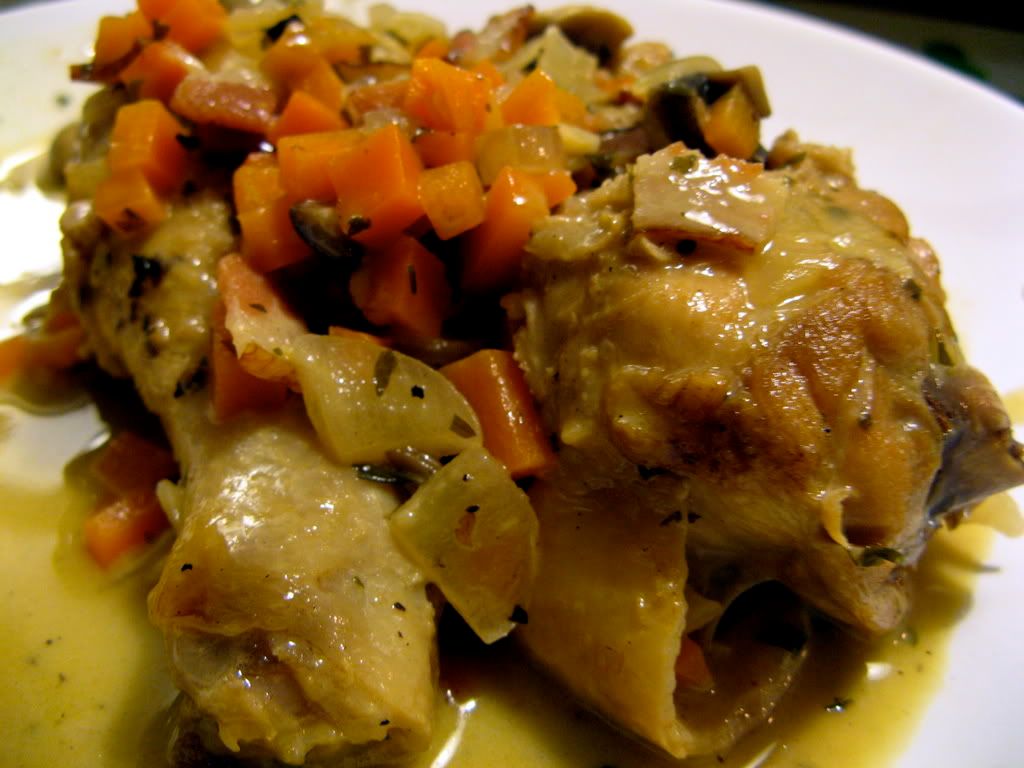

Yeah, I know--it doesn't look super-appetizing. But it did taste good, I swear, especially with a nice loaf of French bread to soak up all the extra sauce and a glass of the Gewurztraminer we had left over. I don't know if anyone has suggestions for how to plate this more attractively.

And if I were to make this again, I'd try to cook the bacon a little bit longer than I did at the beginning--rendering more of the fat would have also meant there'd be more oil to brown the chicken in. I kind of flubbed that step. And I do think thighs would be preferable to drumsticks (more meat, less bone).

But anyhow, thanks to Chubby Hubby, it's good to know that you too can eat gourmet French cuisine, without having to go to too much trouble, even on a weeknight.


Saturday, November 17, 2007

abstract poet: Japanese BBQ takeout

So I got a phone call from Emily at around 6:00 a couple nights ago and found out she was ditching me for dinner. Doh! An empty fridge and no dinner date? In suburban New Jersey this would be a minor crisis, as I’d be forced to choose between dying a variety of slow deaths: fast food, bad Chinese takeout, Chili’s-to-go, etc.

But never fear! I live in Taipei, where a wide array of tasty, inexpensive and only moderately unhealthy takeout options are always literally just down the block. Down the block for us usually means walking down Section 5 of Zhongxiao E. Rd. to Lane 30 of Yongji Rd. (there’s a Crown & Fancy bakery/coffee shop at the corner), where there are a number of interesting food stands and little hole-in-the-wall spots.


Lately I’ve been much enamored with a little shop, about a five-minute walk down this lane, that specializes in Japanese-style BBQ. There’s no English sign, but the name of the place is 烤師傳 (Kao Shi Zhuan), which I guess translates to something like BBQ Master (fluent Chinese readers, correct me if I’m wrong).


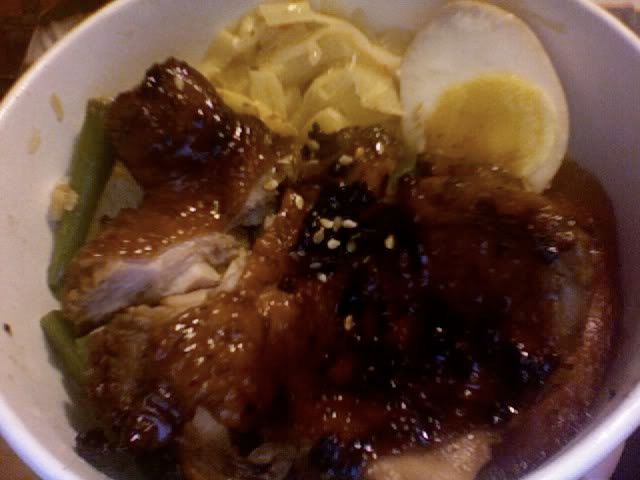
Anyhow, if you like meat (and boy do I like meat), this place is great. They cook everything on a hot charcoal (I believe) grill, with the flames shooting up and everything, and you can pick from a wide selection. I highly recommend the BBQ Chicken Leg set(和風烤雞腿飯):


(sorry for the craptastic Photobooth photos)

It comes with a few generous pieces of grilled BBQ chicken leg (with not much bone to deal with), some green beans, half an egg, some bamboo shoots, a slice of sausage, and rice.

The BBQ here is nice and smoky-tasting, like the ideal of what you try to attain when you’re sitting in front of a campfire with your buddies. The marinade is flavorful without being too sweet and without overwhelming the natural flavors of the meat. I happen to like my meat to have just a little bit of a burnt flavor, and as far as I’m concerned they get it just right.


For only NT$89, it’s really quite a good deal. They also have rice sets that come with grilled beef or chicken breast or eel or a couple different kinds of pork. In the future I want to try their regular BBQ beef set (NT$69) and their garlicky grilled salt pork set (蒜香烤鹹豬肉飯, NT$89). You can also order grilled meat and vegetables a la carte, on skewers or otherwise, for about NT$30 apiece and up. The pork skewer I got one time was juicy and just the right amount of fatty.


There are maybe three little tables inside, so it seems like most of their business is takeout, and if you go by around dinnertime there’s often a sizable crowd of people waiting outside for their orders.


Incidentally, ordering consists of checking what you want on a slip of paper, and it’s all in Chinese, so be forewarned. If you call and order over NT$500 worth, I think they deliver.


On this particular evening, I also picked up an NT$15 xie ke huang (or “yellow crab shell,” which is really a baked sesame pastry with scallions inside) from a vendor across the street.


For about three U.S. dollars for everything, it didn’t end up being too shabby of a dinner at all.


烤師傳

Yonji Rd., Lane 30, Alley 151, No. 2-1, Taipei

(02) 2746-6632

11:00 a.m.-2:30 p.m., 5:00 p.m.-9:00 p.m.

Friday, October 19, 2007

abstract poet: Who You Calling a Puttanesca?

My mama always told me I needed to be more organized. I never paid her much heed (as anyone who’s ever roomed with me or seen my desk at work can attest). But once I started trying to cook semi-complicated dishes with more than ten different ingredients that needed to be prepped and at least half a dozen steps, I discovered that (gasp!) at least in this one area of life, maybe moms had a point.

Sure,
Jamie Oliver can have three different pots and pans sizzling on high heat while he calmly dices up an onion into perfect cubes with one hand tied behind his back, but do I look like an exceedingly handsome blonde celebrity chef with a charming British accent? Don’t answer that.

My kitchen is still often a disaster zone, especially when cooking for guests, but I’ve found that doing as much of your prep ahead of time as possible really makes your life that much easier--and can make cooking seemingly fancy-schmancy dishes a piece of cake, even in a tiny Taiwanese kitchen. My wife (the
Queen of Prep, whom I bow down to) would back me up on this, I’m sure.

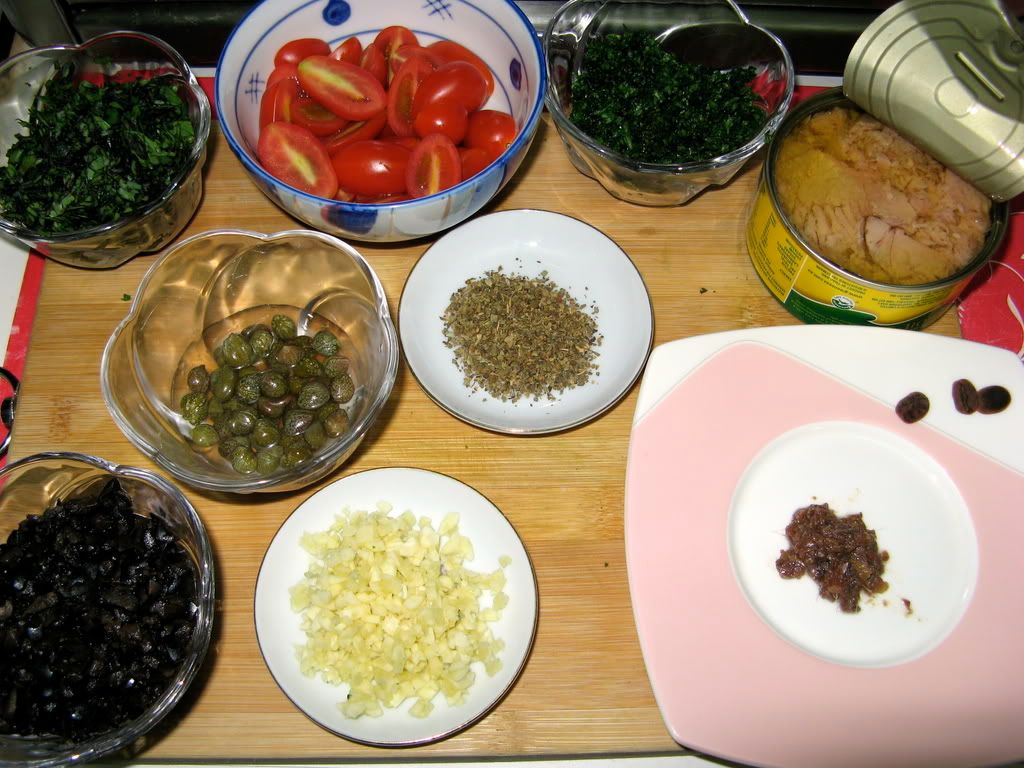
So, maybe it’s a bit of extra work, but it’s well worth your while to have little bowls of chopped this and that all set up before you even turn the stove on, just like they do on TV:


Pictured, clockwise from the top left: minced basil (supposedly 1/2 cup, though I was a bit short), grape tomatoes (about 15 of them, halved lengthwise), minced parsley (2 Tbs), a can of tuna in olive oil, minced flat anchovy fillets (4 of them), minced garlic (3 cloves), chopped black olives (1/2 cup), a handful of capers in their juices, and dried oregano (a teaspoon).

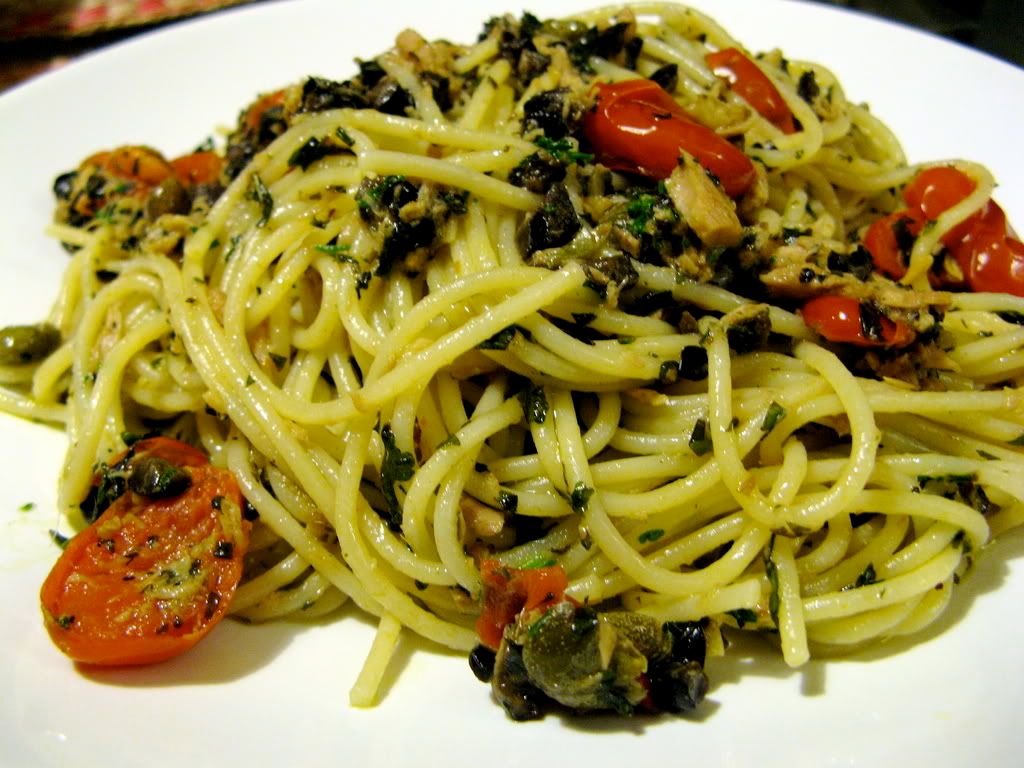
That, and a half a package of thin spaghetti, is all you need to make Spaghettini Puttanesca*, one of the easiest (despite the somewhat daunting amount of mincing you need to do) and most satisfying pasta dishes you can whip up.

Once you’ve done the prep, the dish literally takes less than 10 minutes to put together, turning the above ingredients into this:


All you’ve got to do is:

On one burner, put a big pot of salted water on the other burner and start bringing it to a boil. On another, heat up 1/2 cup of extra virgin olive oil in a large heavy skillet (medium heat should do). Add the garlic, basil, oregano, capers, and half the parsley to the pan. If you want some kick, you can add a crumbled dried chili or a pinch of red pepper flakes too. Stir everything around and let it all cook for a minute or two, until the garlic softens.

Add the tomatoes and cook for a few more minutes until they get soft.

Finally, add the tuna (breaking it up into small chunks), anchovies, and olives. After about a minute, once everything’s heated through, remove the pan from the heat and season it to taste with salt and pepper (you probably won’t need too much of either).

By now your water should be boiling. Cook the spaghettini according to the package instructions (probably 8 or 9 minutes). Once it’s done, drain it, then put it back in the pot. Add the sauce. Toss. Sprinkle on the rest of your minced parsley.

And that’s it. Dinner is served, and all--for once--without even breaking a sweat.

* Roughly adapted from a recipe in Perla Meyers’ “How to Peel a Peach: And 1001 Other Things Every Good Cook Needs to Know”

Wednesday, October 10, 2007

abstract poet: Comfort Food: Bread and Soup


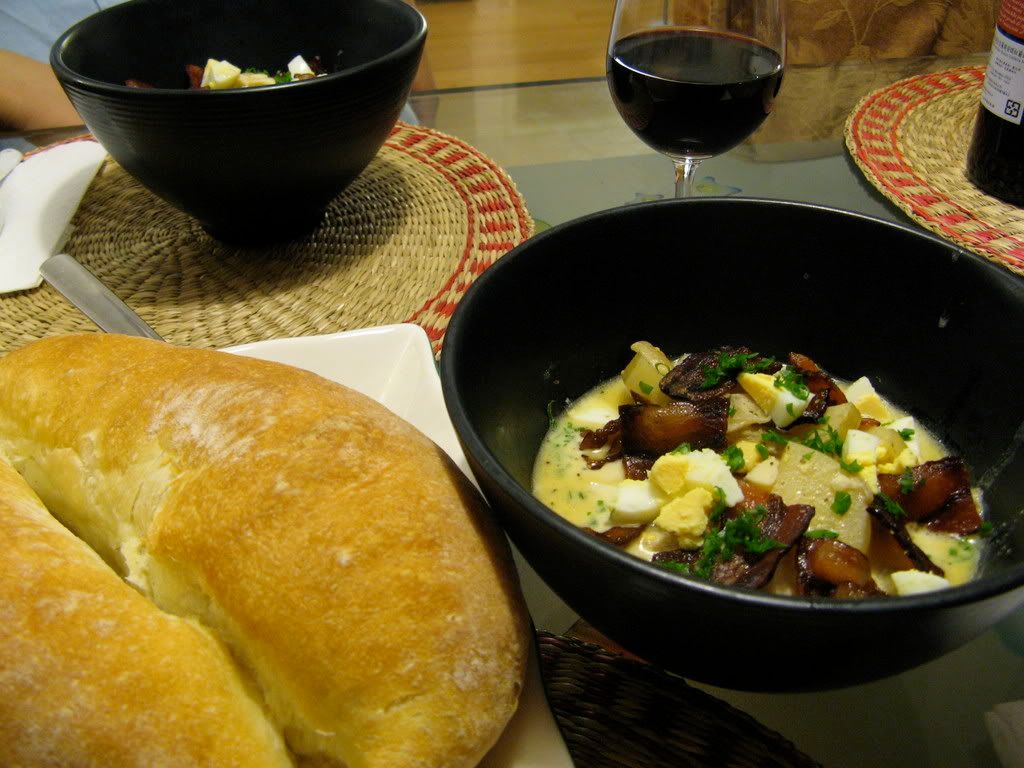
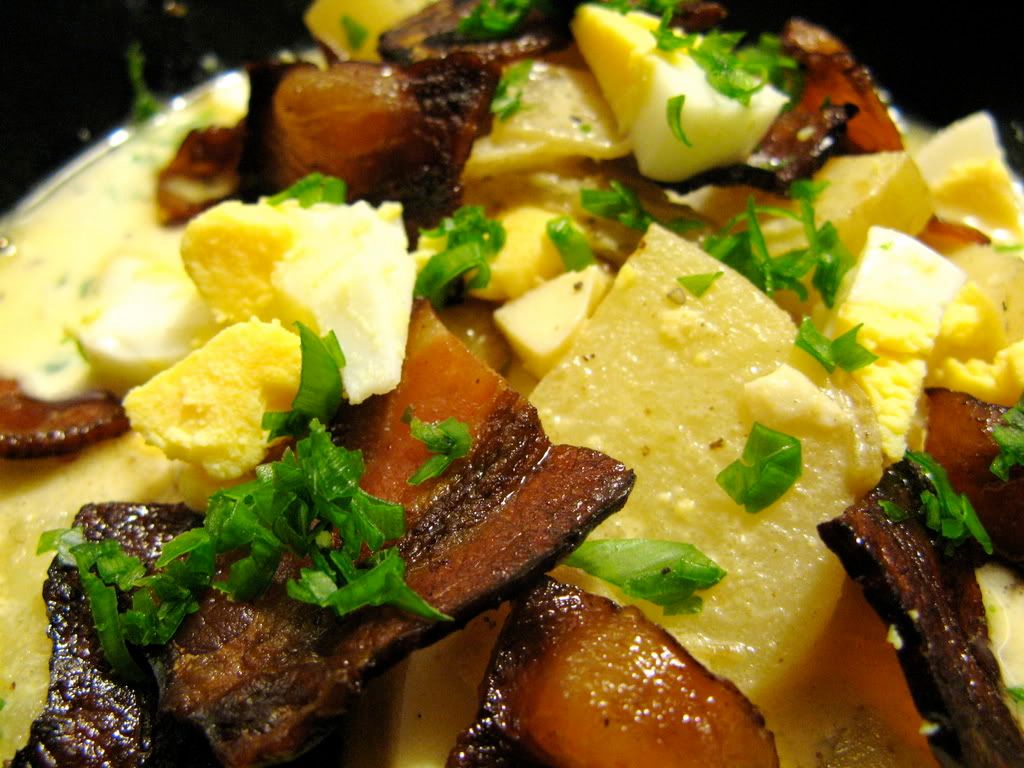
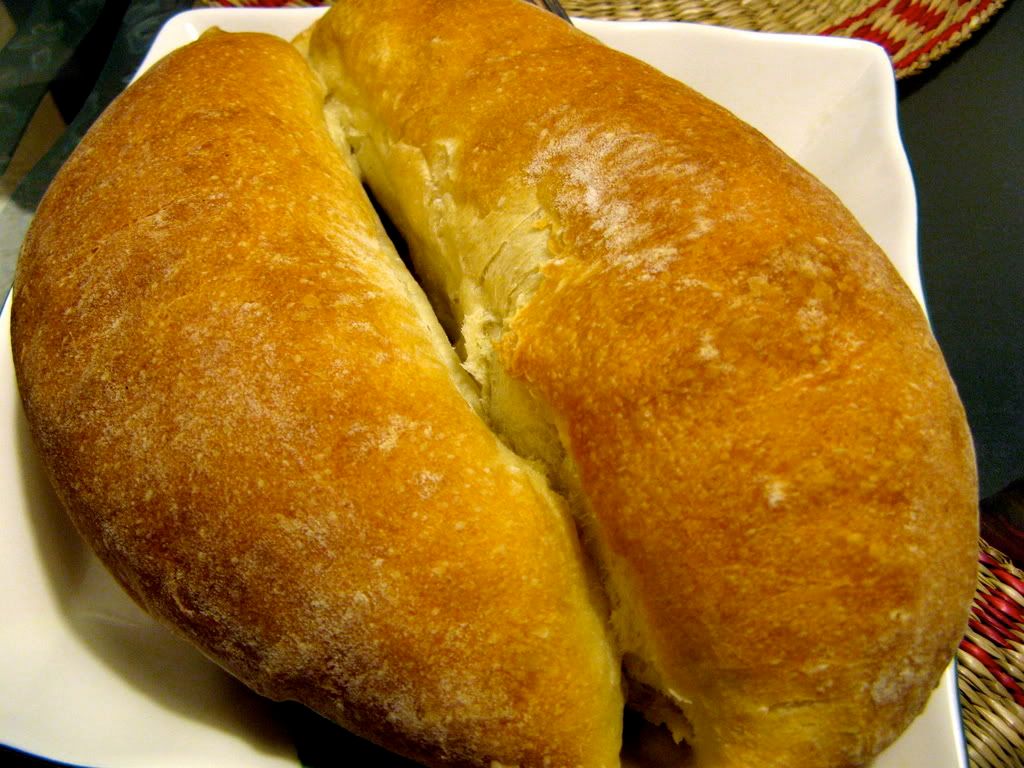
I won’t bore you with the recipe, but just for fun, here’s what we had for dinner the next night: Big bowls of egg chowder with bacon and new potatoes, along with an awesome loaf of crusty, chewy bread that we tore with our hands and slathered with butter. Yum.


The bread was from the Johan bakery in A8 of the Mitsukoshi department store by Taipei City Hall. I love their dessert-ish breads, but this beauty of a loaf made me feel like I was back at my favorite French bakery in Providence (and a bargain at NT$35!).

abstract poet: Sunday Dinner (or How to Make a Pretty Good Steak)

Here's another post from the beloved husband:

Now that the weather in Taipei has cooled down some, Emily and I have finally gotten back into our cooking groove. This past Sunday, for instance, I decided I was going to grill us up some steaks…or o
ne steak for us to share, seeing as we’re ballin’ on budget.

You might call me a “steak
purist” of sorts--I don’t have much patience for the multiplicity of sauces and toppings and other adornments that other people like with their steaks. And that corn-starchy abomination known as black pepper sauce preferred by local Taiwanese-style steak joints just makes me want to vomit. I like my cow to taste like cow. Rub that baby down with a generous handful of salt and freshly ground pepper, then sear it to a perfect medium rare. That’s all. At most maybe do a little beurre rouge (red wine reduction with butter swirled in) on top at the very end.

Bu
t I’ll admit that this minimalist approach works best when you’re working with the highest quality of beef, and unless you live in Argentina or in some quaint Italian village, that can be hard to come by. Especially in Taiwan, where American beef (which isn’t even that great) costs an arm and a leg.

So when I came across a recipe for a marinade for grilled ribeye steak in my 2001 Best of the Best cookbook*, I figured maybe this would be a good way to spruce up mediocre meat. But, just to be safe, I still ended up splurging on an NT$500 ribeye from City Super for my trial run. The recipe, which originally comes from Alfred Portale’s 12 Seasons Cookbook, follows:

The first thing you want to do is season your steaks on both sides with coarsely cracked black peppercorns (mine were just coarsely ground from my pepper grinder), pressing them into the meat.

For the marinade,
the recipe calls 6 tablespoons of extra-virgin olive oil, 3 tablespoons of red wine vinegar, 2 tablespoons of chopped oregano, 1 tablespoon of chopped rosemary, and 3 cloves worth of minced garlic.

That’s for four 12 oz steaks, and I only had one 14 oz one, so I just guesstimated, putting in a little less than a third of everything. The recipe says you can substitu
te half the amount of dried oregano, which I did. I also used dried rosemary, about a quarter of the amount, which I crumbled as best as I could, but I really think fresh rosemary would have been better.

Anyh
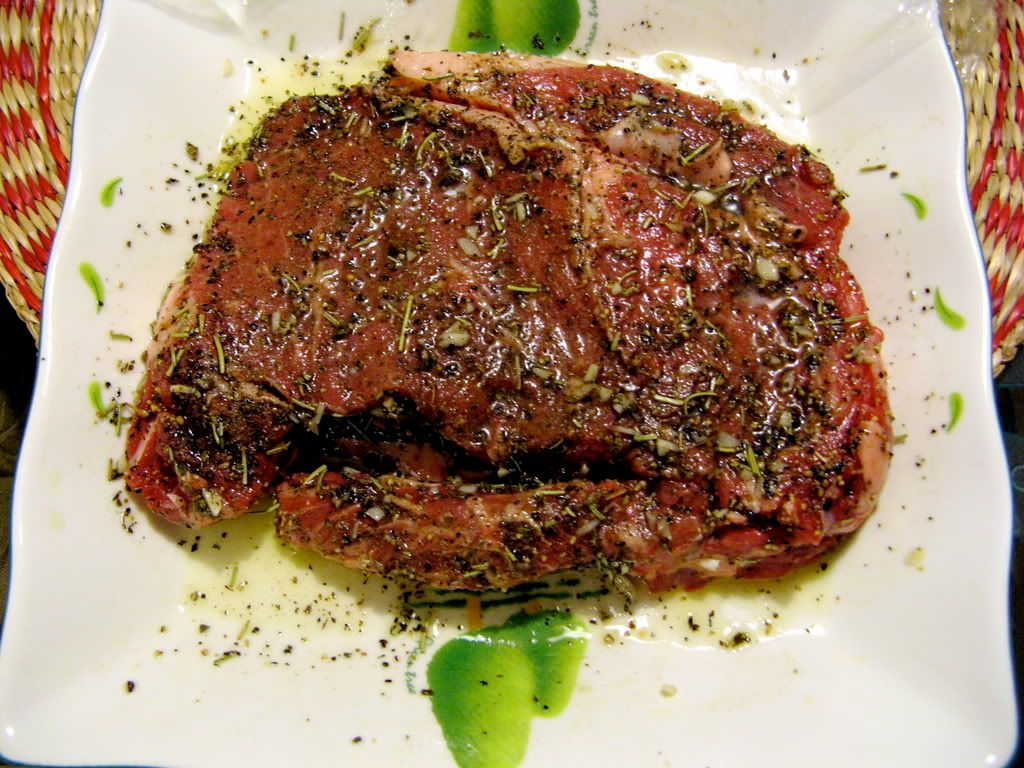
ow, stir this mixture up and pour it over your steaks, coating both sides. Cover them up with saran wrap and let marinate 30 minutes at room temperature (or up to 2 hours in the fridge; just make sure you bring them up to room temperature before you grill). Here’s what my steak looked like as it marinated:


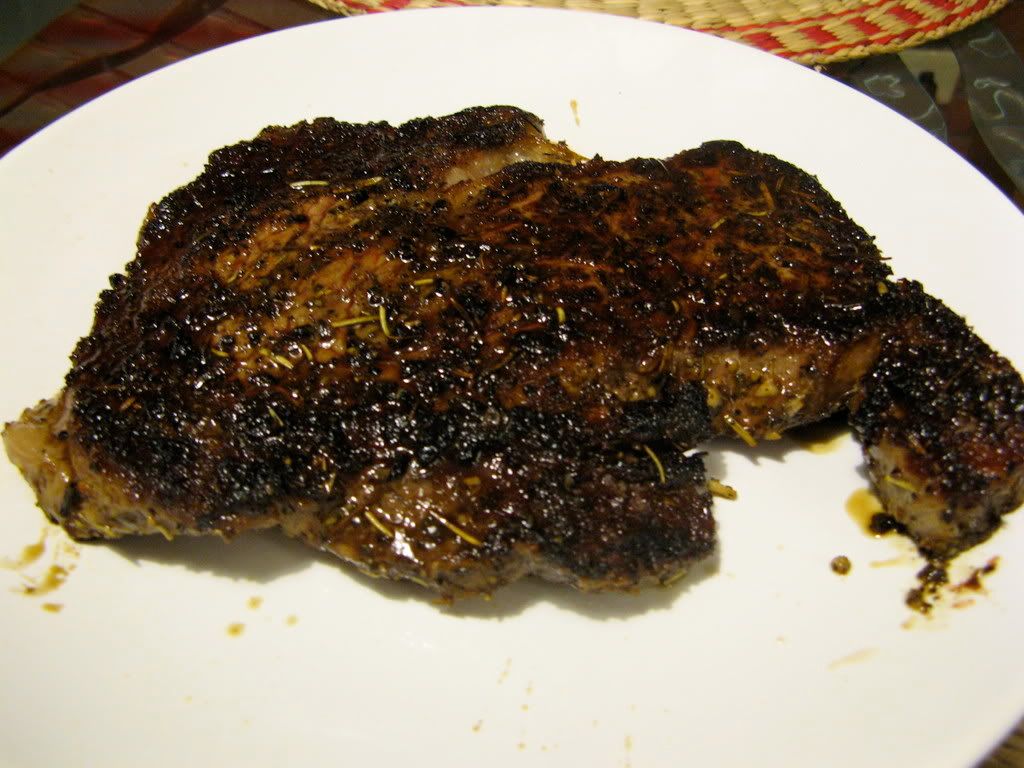
Right before you start grilling, season your steaks generously on both sides with sea salt or kosher salt. This recipe calls for charcoal grilling, but a grill pan or even a regular 12-inch skillet (which is what I used) would work nearly as well. Get the grill/pan nice and hot, and cook the steaks over medium-high heat for about 5 minutes on each side for medium rare, basting them with whatever’s left of the marinade for the first few minutes. Don’t fiddle with the steak too much when it’s cooking, and only turn it over once. It should get nice and charred on the outside. 10 minutes later, voila:


Of course any steak recipe that gives you a cooking time can only estimate, since your meat’s thickness and the heat of your stove/grill will vary. Here’s a neat trick for how to tell when a steak is done: Press the tip of your pinky and the tip of your thumb together (on the same hand). Touch the fleshy muscle in the palm of your hand, just underneath your thumb. It should be pretty taut--that's how a well-done steak should feel when you poke it with your finger.

Now try this using your ring finger (medium-well to medium), middle finger (medium to medium-rare) and index finger (rare).


You should feel that muscle getting squishier and squishier. After you’ve used this method a few times, you’ll get the hang of it, and you won’t have to keep flashing people the “okay” sign or the shocker.


Truth be told, this time around I made the rookie mistake of leaving the steak on the pan while I attended to something else, and by the time I got back and poked it, I knew I’d cooked it for a minute or two too long. So it was more medium than it was medium-rare. Not a fatal mistake, but not perfection either.


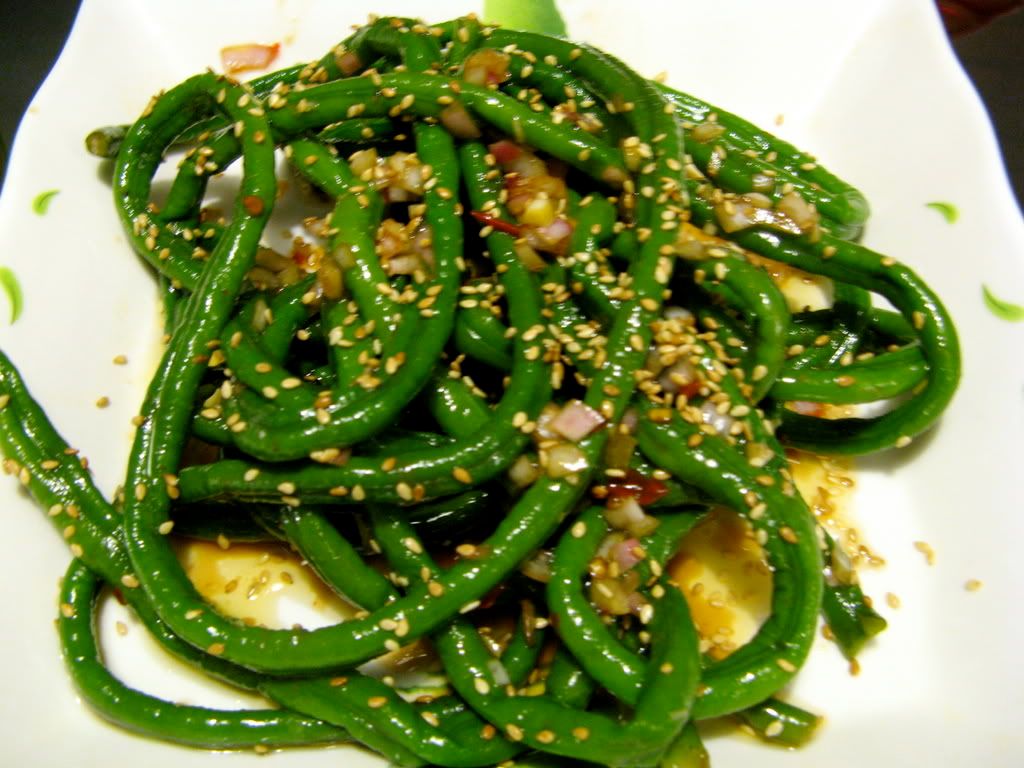
Now let your steak rest on a plate for five minutes (otherwise you’ll lose all the juices with the first cut) before cutting it into thick slices. We served it with a side of Asian-style long bean salad…


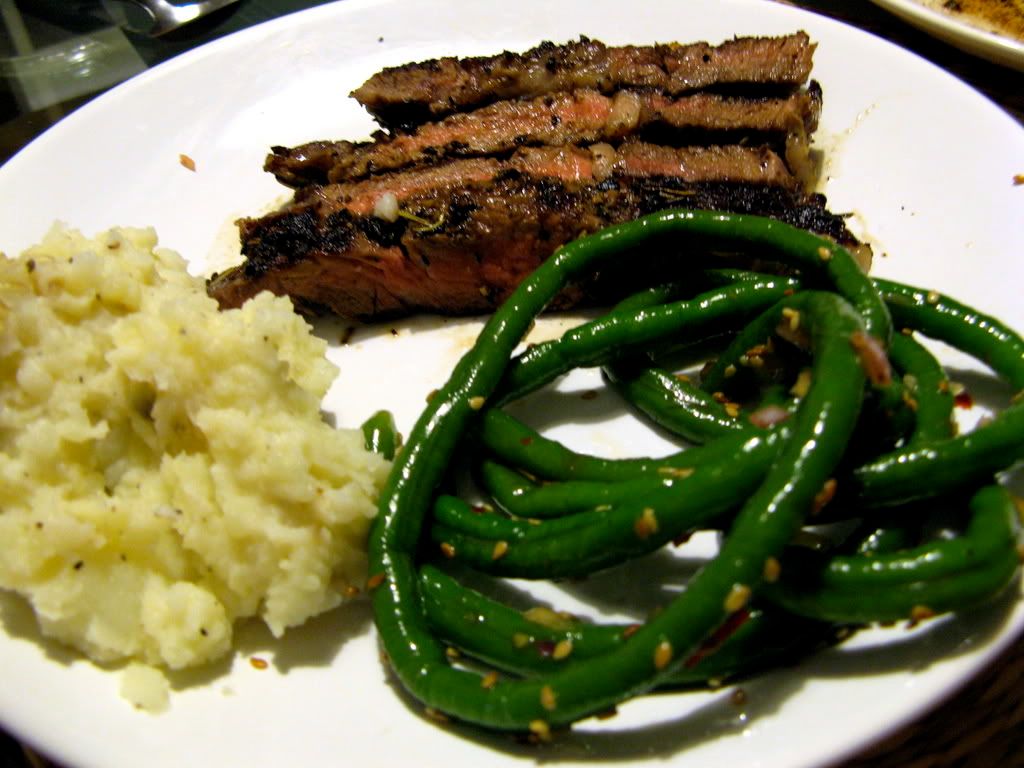
…and some smashed potatoes and an Italian red wine in the glass. Overall, I was pretty happy with the marinade. It took hardly any time to prepare, and it gave the steak a nice herby fragrance and a hint of sweetness without overwhelming the flavors of the meat itself. It was great with the ribeye, but I bet it’d work with other cuts, too, as long as they’ve got some thickness and some fat to them.


So here’s our Sunday dinner, on the plate. Not too shabby.


Loyal readers, if you’ve got any secret steak recipes of your own, feel free to share!

* The best recipes from the best cookbooks that year, as judged by Food & Wine. It’s a pretty kick-ass collection of recipes.

Monday, October 1, 2007

abstract poet: 33 Jian Tang

Emily asked me to do a guest spot for the blog, and [gasp] we're still camera-less. So if you have the patience for all words, no pictures, here goes nothing...


At risk of sounding hopelessly old and unhip, let me start by saying this: I hate Ximending. I hate the flocks of oh-so-cool adolescents who loiter on every street corner and pollute the main pedestrian area with their cheap cigarettes and their ridiculous hairstyles. I hate how there are a hundred trendy clothing boutiques and none of them seem to carry a T-shirt or a pair of jeans I can squeeze into. I don’t understand cosplay. Most of all, I hate how poorly the streets around there are labeled, so that every time my wife and I go with the intention of finding some restaurant or other we’d heard good things about, we end up getting lost, cranky and, most likely, in a fight.

Thankfully, this time around I did my research and, after only a little bit of purposeful wandering toward the outer edges of Ximending, we found ourselves at the door of what proved to be a most pleasant—if not exactly quiet—retreat from the excesses of the local youth culture: 33 Jian Tang (三十三間堂) or, as it’s called in English, 33 Rooms.

Make sure you take off your shoes as you walk in (holey sock wearers beware!), unless you want to catch grief for tracking dirt on the restaurant’s polished wood floors. Emily and I were seated up in a little loft we had to climb a ladder to reach, overlooking the main dining room. The table was low, and we sat (or, in my case, reclined) on cushions one of the barefooted waitresses laid out for us.

Just as memorable than the restaurant’s ambiance and excellent food is its owner, an older Taiwanese woman whom the word “flamboyant” hardly does justice. When we hesitated for a moment upon arrival, she shrieked, “Come in!” and then remarked, to the entire restaurant it seemed, on how hard it was to make any money on a party of two (later, she said of another table, “They don’t eat sashimi; they don’t eat beef. I don’t know what I’m supposed to sell them.”).

Rather than take offense, the regulars eat this shtick up. 33 Jian Tang is very much its lao ban niang’s restaurant. She orchestrates the whole show, yelling at waitresses one moment, doing shots of sake with a table of businessmen the next, and prone to suddenly burst into Japanese opera, much to the amusement of her captive audience. The woman is LOUD, perhaps the loudest Asian woman I’ve ever encountered, and I’m pretty certain she was quite drunk by the time we went up to pay the bill at the end of the evening. "I'm sorry I didn't make it over to your table to yell at you tonight," she said, flirtatiously. Yes, I think maybe she was flirting with me.

But lest you think the restaurant is all show and no substance, let's move on to the food. 33 Jian Tang doesn't have a menu, so the owner just picks out what's going to be served each day. That's not to say that you don't get billed for each individual dish, but it's the sort of place where asking what something costs before you let them bring it to you would seem poor form. Don't go, then, if you aren't prepared to pay a rather hefty bill--at least NT$1,000 a person, but more likely upwards of NT$1,500 if you're drinking plenty of plum wine or ice-cold sake, as we were. Later I read other reviews that talked about how you can tell your waitress how much you want to spend, and they'll customize what they bring you accordingly. This time around, we just put ourselves at the mercy of the chef, but I was happy with what we got for the money.

We had plump oysters, six of them, brought raw to our table and simmered in a small hotpot in a fragrant miso sauce. They were still half raw when we ate them, positively bursting with ocean goodness. We had big king crab legs that were served propped up, on a bed of ice, in front of a perfect yellow orchid. Alongside was a small bowl of rice vinegar for dipping.

There was a big platter of super-fresh Japanese sweet shrimp sashimi (heads attached). There was the surprising combination of a fried fish fillet served over half a pink grapefruit. As you ate the fish, you dug into the flesh of the grapefruit with your spoon and poured some of the juices on top, mixing it with a light cream sauce. There was the tray of grilled fish livers that I gobbled up, seduced by their earthy depth of flavor. And, when we were nearly too full to eat another bite, there was a generous portion of cold beef salad with a peanut-vinegar dressing, featuring some of the most tender slices of perfectly rare steak I've tasted.

There are other dishes I'm forgetting to mention, at least ten of them in total. Each was beautifully presented, a miniature work of art (I thought Emily was going to stab herself for not having our camera with us); the flavors were clean and unpretentious. The only courses I didn't like as much were the snails-on-a-skewer (which were fine, but nothing special) and the seaweed soup (which I'm just not a huge fan of generally). For dessert we had a refreshing mixture of sweet red beans and chestnuts with almond tofu.

All in all, it was one of the best--and definitely the most unique--Japanese meals I've ever had, though I'll admit I'm far from an expert. For obvious reasons 33 Jian Tang wouldn't be the best choice for the thin-skinned or the budget-conscious. By the same token, the food we ate that night veered a bit more toward the adventurous side of Japanese cuisine, at least by Western standards. If you're not the adventurous type, you could, of course, tell your waiter or waitress what types of things you aren't willing to eat up front, but then what's the point? Half the fun is not knowing what they're going to bring to your table next.

If you want more conventional, but equally excellent, Japanese food with a quieter ambiance, try Sumie or, from what I can gather, any of a number of other restaurants in Taipei. But if you're in the mood to try something a little bit different, 33 Jian Tang is well worth a visit. I'm glad I’ve found at least one place in Ximending I won't mind going back to.


33 Jian Tang (三十三間堂
116 Kangding Rd., Taipei (台北市康定路116號)
(02) 2361-0807, 0806